Ten Tips for New Product Managers
Four types
of “new” Product Managers:
Your relationship to the organization
New
|
Tenured
| ||
Type of
Product
|
New
|
New product,
New organization
|
New product,
same organization
|
Existing
|
Existing product,
New organization
|
Existing product,
same organization
|
Ten Tips:
Ø Spend time with customers
Ø Ask “dumb” questions
Ø Let go of your past
Ø Surround yourself with experts
Ø Gather data
Ø Focus
Ø Concentrate on what, not how
Ø Communicate, communicate, communicate
Ø Sell your product internally
Ø Do whatever it takes
Spend time with customers

►
The single most important thing a product
manager can do is to understand the market
►
The best way to understand the market is
to spend time with customers
►
Spend more time with customers than with
colleagues
►
Set goals for customer visits
►
Establish a regular schedule for customer
interactions
►
Bring colleagues along with you
►
Bring back information to share
Ask “dumb” questions

►
“Dumb” questions are really more about when they get asked than about what
you are asking.
►
New product managers have the luxury of
asking naïve questions
►
Ask as many questions as possible as soon
as possible
►
Who to ask? Customers, colleagues,
stakeholders, superiors, partners, competitors…
►
Develop a list of initial questions
►
Generate additional questions each time one
is answered
►
Make note of interesting answers for
future reference
►
Ask the same question to different people and
compare answers
Let
go of your past

►
What were you in your “past” life?
Whatever it was, you’re a product manager now.
►
There is a natural instinct for product
managers to gravitate towards the function of the business from which they came
– resist it
►
Audit
the time you are spending on each area of the product
►
Have an open conversation with
colleagues in your former role
- Discuss experiences and establish
boundaries
►
Think hard before overruling decisions
►
Review regularly to discuss progress
Surround
yourself with experts
►
Product managers can not and should not do
it all alone
►
Your success depends on others
►
Do not try to be an expert in everything
►
Leverage the expertise of others in
certain areas
►
Look for “formal” and “informal” advisors
►
Experts do not just have to be within your
organization
►
Identify areas important to product’s
success
►
Identify internal experts in targeted
areas
►
Enlist experts as Trusted Advisors
►
Utilize advisors for decision-making,
planning, support and overcoming obstacles
Gather data

►
“In a truly consumer-driven company,
decisions are based on data… so the person with the best data wins.” – Scott
Cook; Founder, Intuit
►
Lots of different
types of data…
v Internal data
v External data
v Market data
v Product data
►
Gather existing market research and
industry data – primary and secondary
►
Identify information gaps and develop
plans to fill them
►
Gather existing product performance data
►
Identify missing and desired information
and leverage colleagues to obtain
- If desired data is not available, quantify the value
of it in
order to obtain support for projects to gather it
Focus

►
It will be overwhelming
►
You will not know where to start
►
It is better to do one thing well than to
do a lot of things poorly
►
Make a list of all of the “internal” and
“external” priorities
►
Determine timelines, relative levels of
effort, and resources required
►
Pick a few quick wins and focus initial
effort
►
During that time, develop longer-term
focus
►
Get agreement on focus, communicate, and
reiterate it
Concentrate on what, not how
►
It will be tempting to control “how”
things get done with your product
►
Resist the temptation
►
Product managers should define “what”
needs to happen…
►
… and others should define “how” those
things happen
►
Clarify roles and responsibilities with
team members
v Engineering
v Design
v Marketing
►
Get regular feedback on whether you and
others are keeping with the agreed-upon responsibilities
Communicate, communicate…

►
Do not underestimate the importance of
communication in all forms
v
Informal, formal, written, verbal,
unspoken, method, timeliness, frequency, ton
Communication


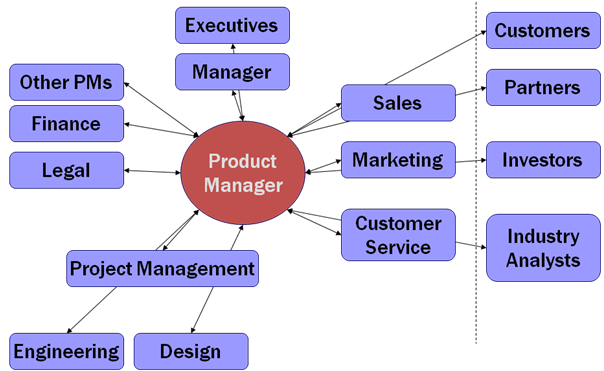
Communicate,
communicate: To Do
►
Audit current communications (if any)
►
Get feedback from stakeholders on
preferred communications channels and frequency
►
Develop communications plan; type and
frequency
v Email newsletter
v Intranet site
v “State of the Product” presentations
►
Set reminders about communications and
stick to schedule!
Sell your product internally
►
Be the champion for your product.
►
“Sell” your product to executives, team
members, other departments
►
Will help gain resources, funding, support
for issues and new initiatives
►
Regularly communicate good news
v Don’t go overboard
v Don’t ignore or try to dismiss bad news
►
Make sure your communication plans include
all the necessary audiences
►
Get others to help sell your product
v Explicit “enlistment”
v Find good supporters and keep them happy
Do whatever it takes
“Be willing to do whatever it takes.
…
I know of many cases where the product manager needed to help out with deliverables for customer support, sales
training, technical writing, QA, engineering, and marketing. You may need
to just do it.”
Do
whatever it takes: To Do
►
Learn about as many areas of your product
as possible
The more you know, the more you can help
►
Help out at the right time
-Don’t start too early, but don’t wait too long
►
Don’t complain about having to help out
-But make sure to discuss it later if there are skill or resource issues
that need to be addressed
Bonus
tip #11
►
Learn from other product managers.
►
There are plenty of great (and often
free!) resources available
►
Books, blogs, newsletters, webinars,
conferences, training, professional associations, local groups, mailing lists,
social networking sites…
Resources
►
How To Be A Good Product Manager.
2) Ask dumb questions
–
www.goodproductmanager.com/2007/02/09/ask-dumb-questions/
3) Let go of your past
–
www.goodproductmanager.com/2007/01/30/let-go-of-your-past/
4) Surround yourself with experts
–
www.goodproductmanager.com/2007/02/22/dont-do-it-all-or-do-it-all-yourself/
7) Take responsibility for what, not how
–
www.goodproductmanager.com/2007/02/14/take-responsibility-for-what-not-how/
10) Do whatever it takes
–
www.goodproductmanager.com/2007/04/04/help-out-in-areas-outside-of-product-management/
–
More topics at www.goodproductmanager.com
►
Brainmates: So You’re a New Product
Manager…
–
Part 1: www.brainmates.com.au/?p=165
–
Part 2: www.brainmates.com.au/?p=153
–
Part 3: www.brainmates.com.au/?p=159
–
Part 4: www.brainmates.com.au/?p=166
–
Part 5: www.brainmates.com.au/?p=169
►
On Product Management: How to be a Great
Product Manager
–
onproductmanagement.wordpress.com/2007/08/14/how-to-be-a-great-product-manager-boxed-set-with-bonus-features/
►
Lots of other great Product Management
blogs
–
www.goodproductmanager.com/resources/
►
These slides are available online
–
www.jefflash.com/work/
–
Interested in getting your feedback
–
jeff@jefflash.com

No comments:
Post a Comment